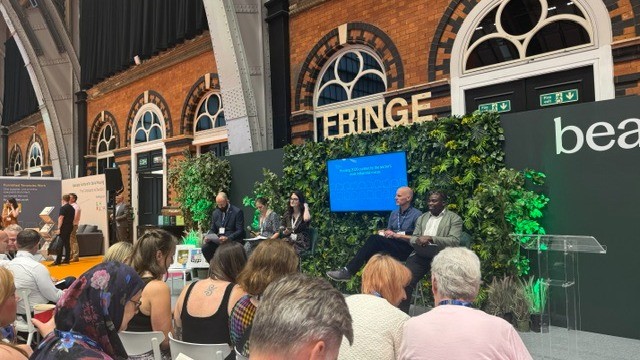

Thirty-degree heat outside should, by rights, have thinned the crowds. Instead, I’ve never seen Housing busier than on my visit this year.
Six stages, around 37 panel and seminar sessions across the exhibition floor (before you even count the main conference), and almost every one of them standing room only. At points you simply couldn’t move down the aisles for the heavy footfall and people checking out the offerings on the stands. The atmosphere felt buoyant – like a sector that, whatever its pressures, turned up this year feeling confident about where it’s going.
So, what’s hot at Housing 2026 (apart from the weather)?
AI is now practical, day-to-day reality
What was a real highlight was seeing that one of the causes of the confidence and buzz is something that, only a few years ago, was arguably treated with a sense of trepidation by many in the sector. AI was everywhere (nine of those 37 sessions carried it in the title), but the real shift this year was in tone, not volume.
The AI conversation has stopped being speculative. The sessions weren’t predicting possibilities for years to come; they were offering practical demonstrations and insights into how AI is already delivering improved outcomes in operations, tenant engagement, compliance and problem-solving across the sector today.
Set that alongside the growing presence of ‘smart’ and ‘intelligent’ solutions across the exhibition floor, plus serious players like Amazon turning up with impressive stands, and the message is unmistakable: this is a sector that has decided to embrace tech innovation as part of its everyday.

Prioritising the tenant voice
Another overarching theme ran through the event was ‘the voice of the tenant’ – making sure residents, both temporary and permanent, are seen, heard and respected, and genuinely part of how decisions get made. The topic had its own dedicated stage and was a key thread of a standout fringe session with the ever-impressive Paul Dennett.
Inclusion and engagement came up again and again. On the face of it, none of that is a tech story. But look closer and tech is precisely what’s making the conversation, and the solutions being put forward, possible. Understanding what tenants think en masse, and acting on it, simply couldn’t be done a generation ago.
For me, that sums it up. With this influx of technology, the sector hasn’t simply discovered new toys, it’s found new tools to approach, and create fresh solutions for, its most enduring and important priorities.
Standing out in a crowded space
All of which left me, with my B2B marketing hat on, with one nagging thought. For the organisations selling into this sector, that very appetite for innovation is a double-edged sword. The same enthusiasm filling the exhibition hall is also filling the market with noise.
There’s now a piece of software for almost any painpoint you can name, and every provider promises transformative results. For the buyer – typically a cautious, accountable decision-maker weighing how to allocate highly scrutinised budgets – the challenge is no longer finding a solution. It’s how to identify the most beneficial ones for their organisation’s needs.
And that’s a marketing problem, not a product one. When everyone claims to be the silver bullet, the suppliers who break through won’t be the loudest or the slickest. They’ll be the ones whose message is clearest, targeted, and, above all, backed by compelling evidence.