
Ella Broadbent, Senior PR Consultant at PR and strategic comms agency Petal & Co
It’s Manchester, we do things differently here.
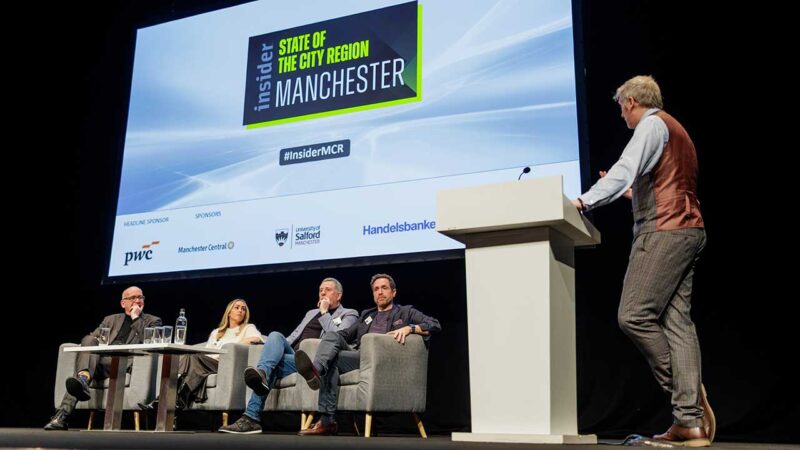
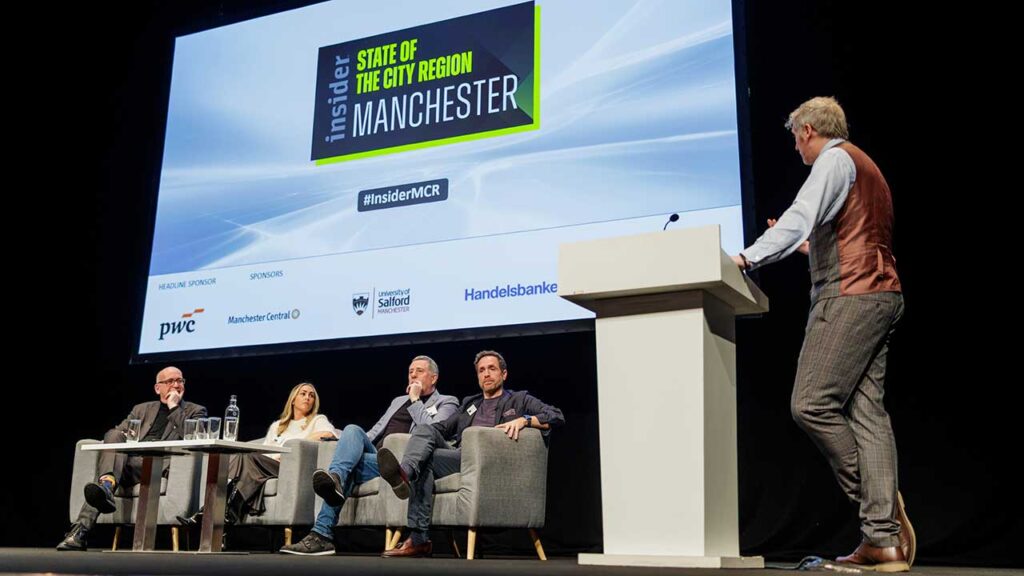
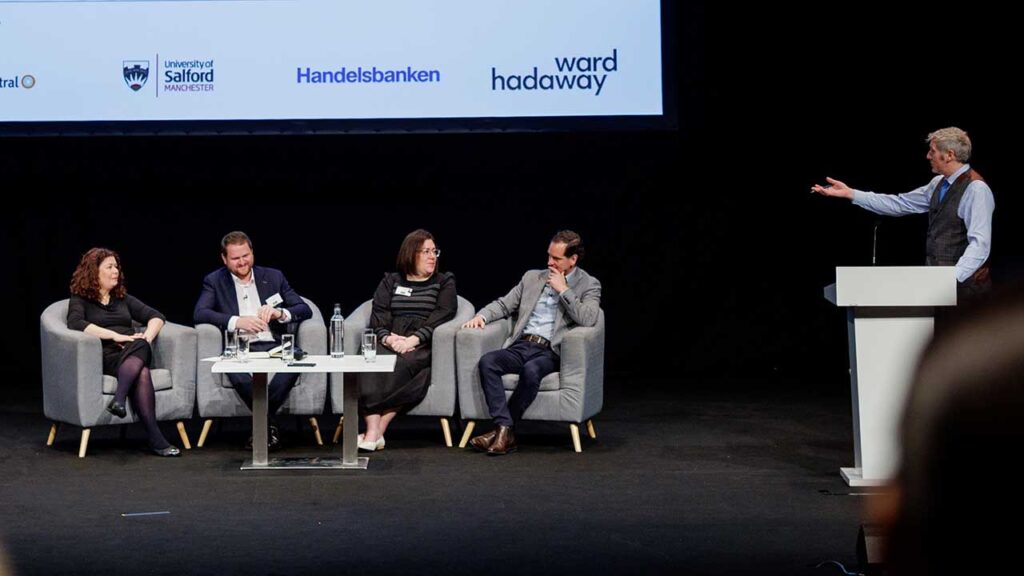
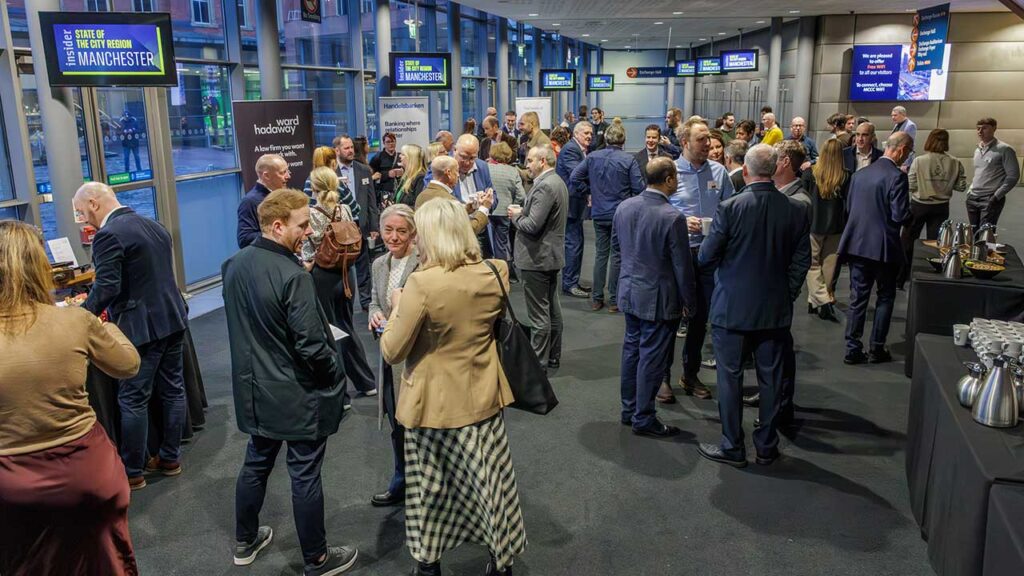
That was the resounding message that came across in Insider’s State of the City Region – Manchester event this week.
The discussion brought together senior business leaders and economic visionaries from across Greater Manchester, and the consensus was strong: despite economic uncertainty, the city region is moving with momentum.
It is a promising time for Manchester. Andy Burnham outlined plans to allocate £400 million to a first wave of projects, expected to deliver nearly 3,000 homes, more than 22,000 jobs and 2 million square feet of employment space. These plans, and the wider development pipeline, reflect a city region that is confident about its future.
Here are the key themes that emerged from the discussion.
Growth projections and thriving sectors
Manchester’s economy continues to gather pace. GDP growth has consistently outperformed the UK average, and forecasts point to annual growth of around 2.1-2.5% through to 2026. That momentum is visible across the city region, with a major development cycle underway and a £1 billion Good Growth Fund supporting innovation, technology and significant city centre residential schemes.
This growth is not limited to one sector. Knowledge-intensive business services, tech, life sciences, digital and green technology are driving much of the expansion, while manufacturing, finance, property and food and beverage are strengthening the economic mix. Across the board, businesses are adapting their operating models to remain resilient through periods of uncertainty.
More than a decade on from devolution, Manchester’s steady and well-defined growth strategy continues to attract businesses, talent and investment, reinforcing the city’s reputation for doing things its own way.
Skills and innovation
The familiar warning that AI will replace jobs did not land in the room. Instead, leaders spoke about a growing appetite to use AI as a practical tool to augment professional roles across Manchester – improving efficiency and helping people develop and progress in their careers.
Education is moving quickly to meet this shift. Universities across the city region are responding to emerging skills gaps by embedding AI and digital capability into their courses. The University of Salford is integrating AI training across a wide range of courses, while the University of Manchester has become the first university globally to offer Microsoft 365 Copilot access and training to all students and staff.
This focus on skills and innovation reflects a city that is preparing its workforce for change, rather than fearing it.
Collaboration at the heart of the region
Anyone who spends time in Manchester feels the strength of its identity and community. That same unique spirit runs through the region’s business environment. Business leaders repeatedly returned to the importance of collaboration – not only within sectors, but across business, the public sector and academia.
This shared approach, coined throughout the sessions as a ‘triple helix’, is a recurring theme of Manchester’s success. The city’s regeneration story reflects this way of thinking. From Ancoats and Deansgate to the Co-op Live arena, development has focused on creating places rather than isolated projects, with long-term value for communities built into the design.
Tom Stannard, Chief Executive of Manchester City Council, spoke about the public sector’s long-standing role in clearing barriers for businesses across Greater Manchester. He noted that the city has now reached a point of maturity where collaboration happens naturally, creating the conditions for sustained growth. As a result, the Council’s focus is shifting towards supporting an already strong business base while continuing to invest in wider priorities for the region, including rail connectivity and tackling poverty and deprivation.
Forget London – Manchester on the global stage
When the conversation turns to scale and ambition, Manchester increasingly stands on its own terms. It is now recognised as one of Europe’s fastest-growing tech cities, with strength across advanced manufacturing and innovation placing it firmly on the international map.
Comparisons with London remain economically valid, but they only go so far. London’s size brings complexity, uneven growth patterns and a challenge to make meaningful impact at pace. Manchester, by contrast, continues to outperform expectations despite receiving significantly less government-backed infrastructure and long-term investment. Business leaders were candid about the need for greater support from central government to maintain momentum.
Forget London. Manchester is becoming a globally recognised destination for business, investment and culture in its own right. From its status as the world’s first UNESCO City of Music to its global creative influence, Manchester has long punched above its weight internationally. Business and culture sit side by side here, reinforcing each other and shaping how the city is perceived abroad.
Perhaps most importantly, Manchester’s people remain one of its strongest assets. The openness, confidence and sense of collective pride were repeatedly cited as accelerators for growth, creating a city that attracts talent, encourages collaboration and competes confidently with major European counterparts.
A clear direction for the next chapter
If Manchester continues to move with the same confidence and collective purpose, the city region is set to remain one of the UK’s strongest economic success stories – on its own terms, and on the world stage.